This season from Dorobo Fund: 20 reef sharks, 10 land titles, and a historic day for the Maasai
Dear Friends,
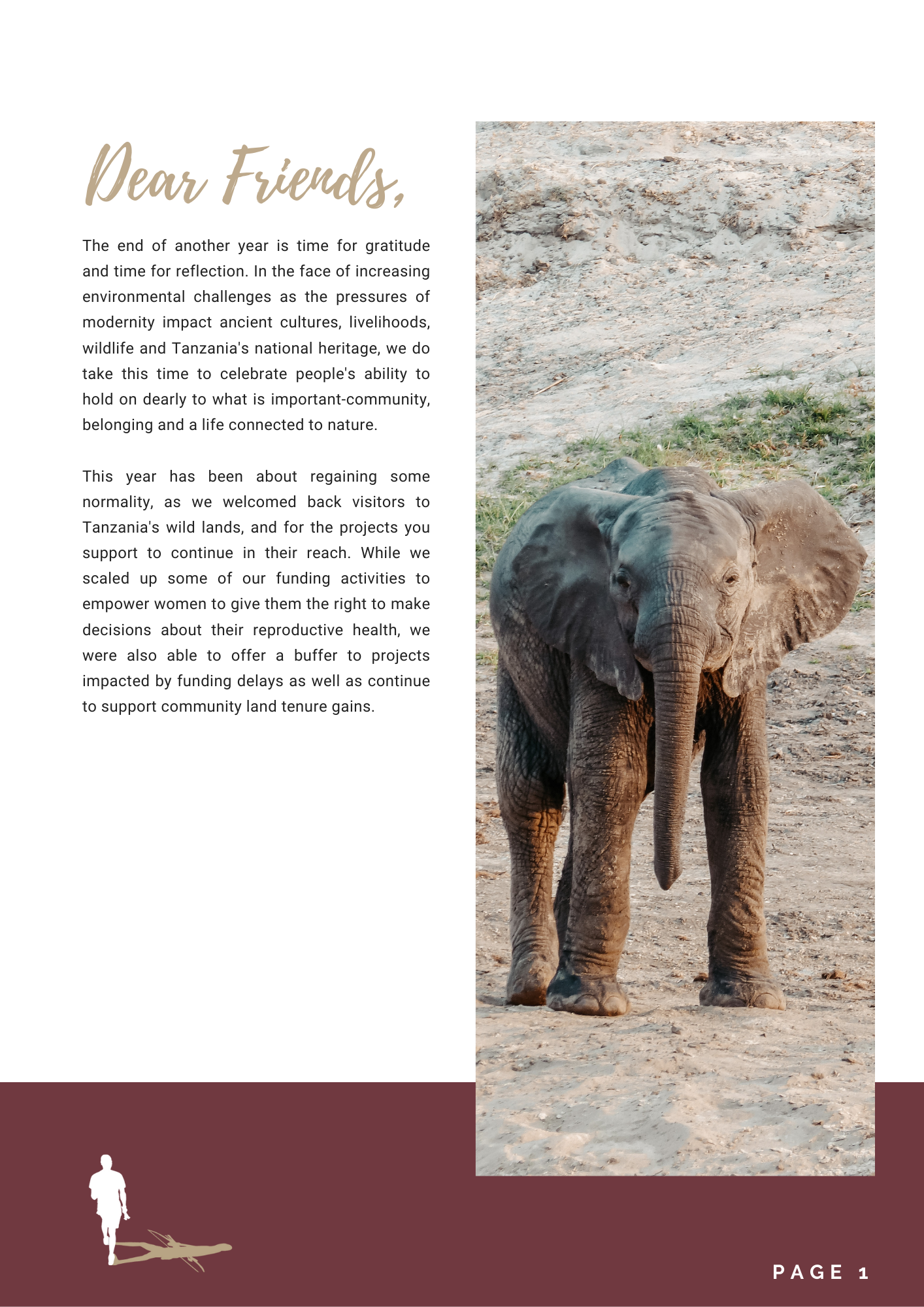
This season takes us to three very different corners of Tanzania: out to the reef off Maziwe Island, into the miombo woodland the Sandawe have called home for generations, and across the steppe, where Maasai leadership just took a historic new shape.

White tip reef sharks contributing to the thriving Maziwe reef ecosystem. Photo credit: Brendan Simonson
Marine Conservation
Twenty reef sharks off Maziwe
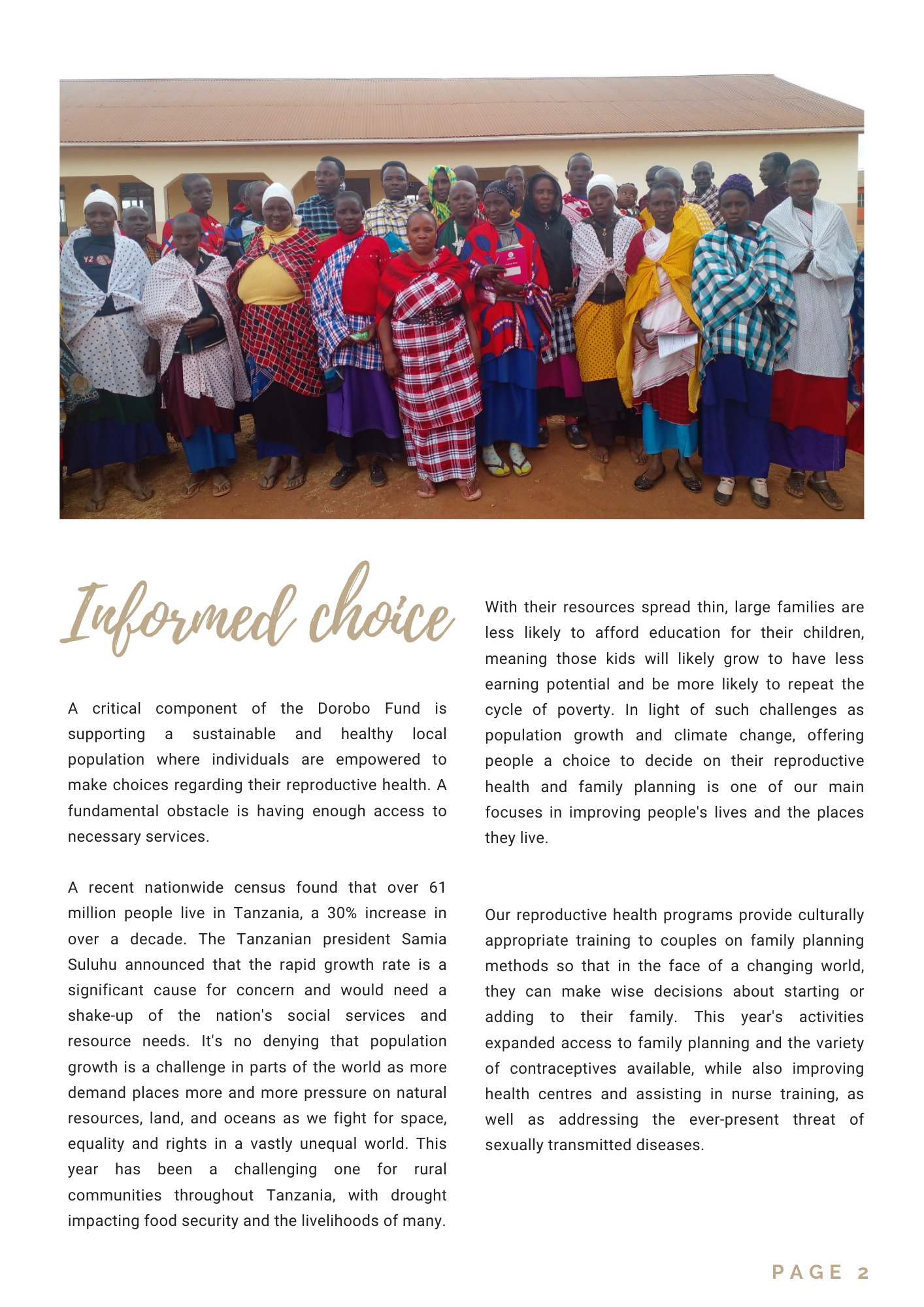
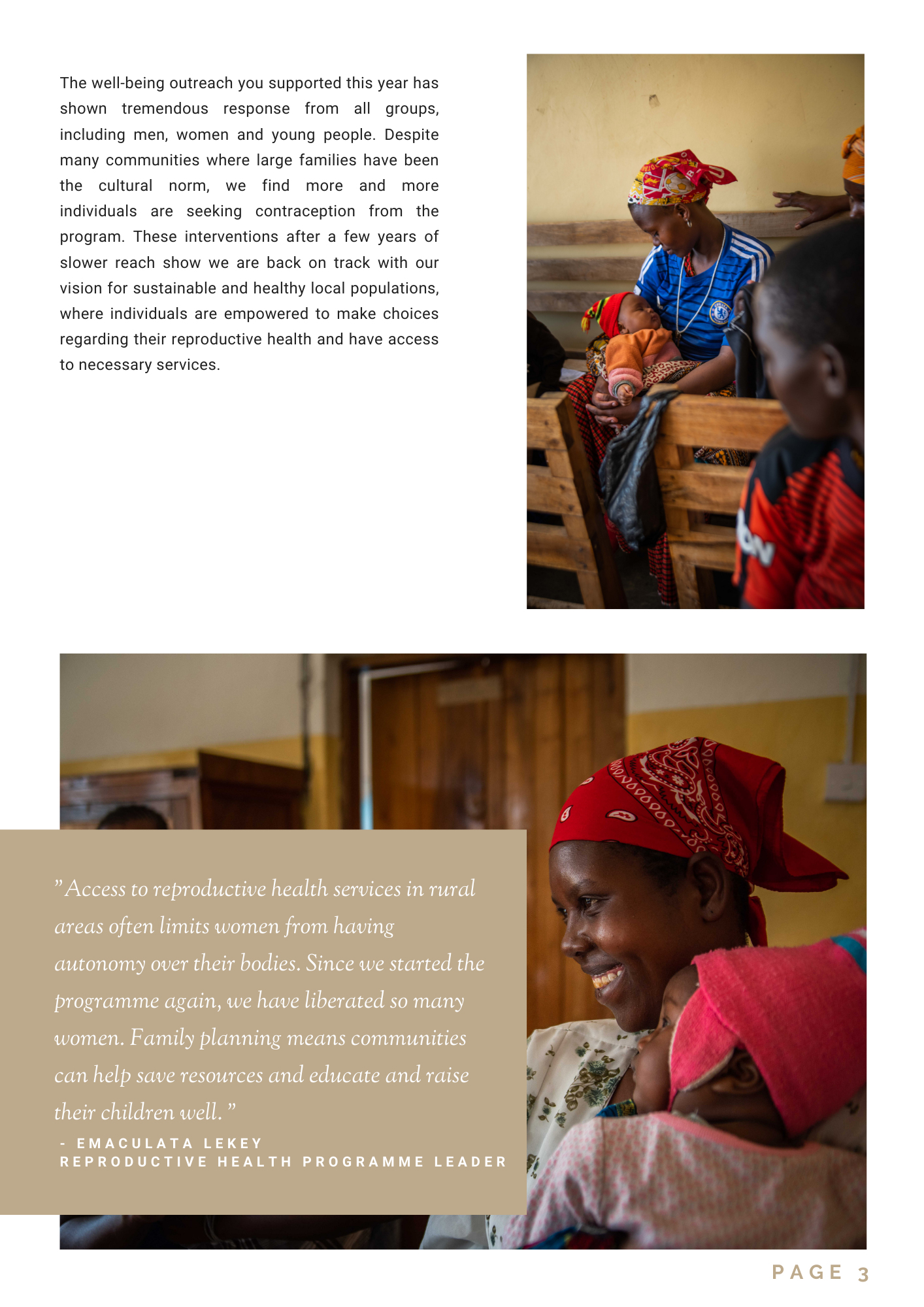
This year, the Friends of Maziwe team counted twenty reef sharks working the coral gardens around the island — a sighting that would have been unthinkable a few years ago. Reef sharks sit near the top of the food chain, so seeing this many tells us something the fish counts alone can't: there's enough prey, enough structure, and few enough disturbances left in the water for real predators to return.
It's the clearest sign yet that two decades of community patrol work around this small marine reserve off Pangani is paying off. That work got bigger this year: a generous donation at the start of 2026 let us add staff to the daily boat patrols that keep Maziwe's no-take zone enforced in practice, not just on paper. The extra hands mean steadier coverage of the reef and a faster response whenever a boat strays into protected water.
We also want to introduce you to Kate Vannelli, who recently donated several original art pieces to Friends of Maziwe. The proceeds will go directly toward patrol costs and the turtle nest relocation work Friends of Maziwe runs each season.
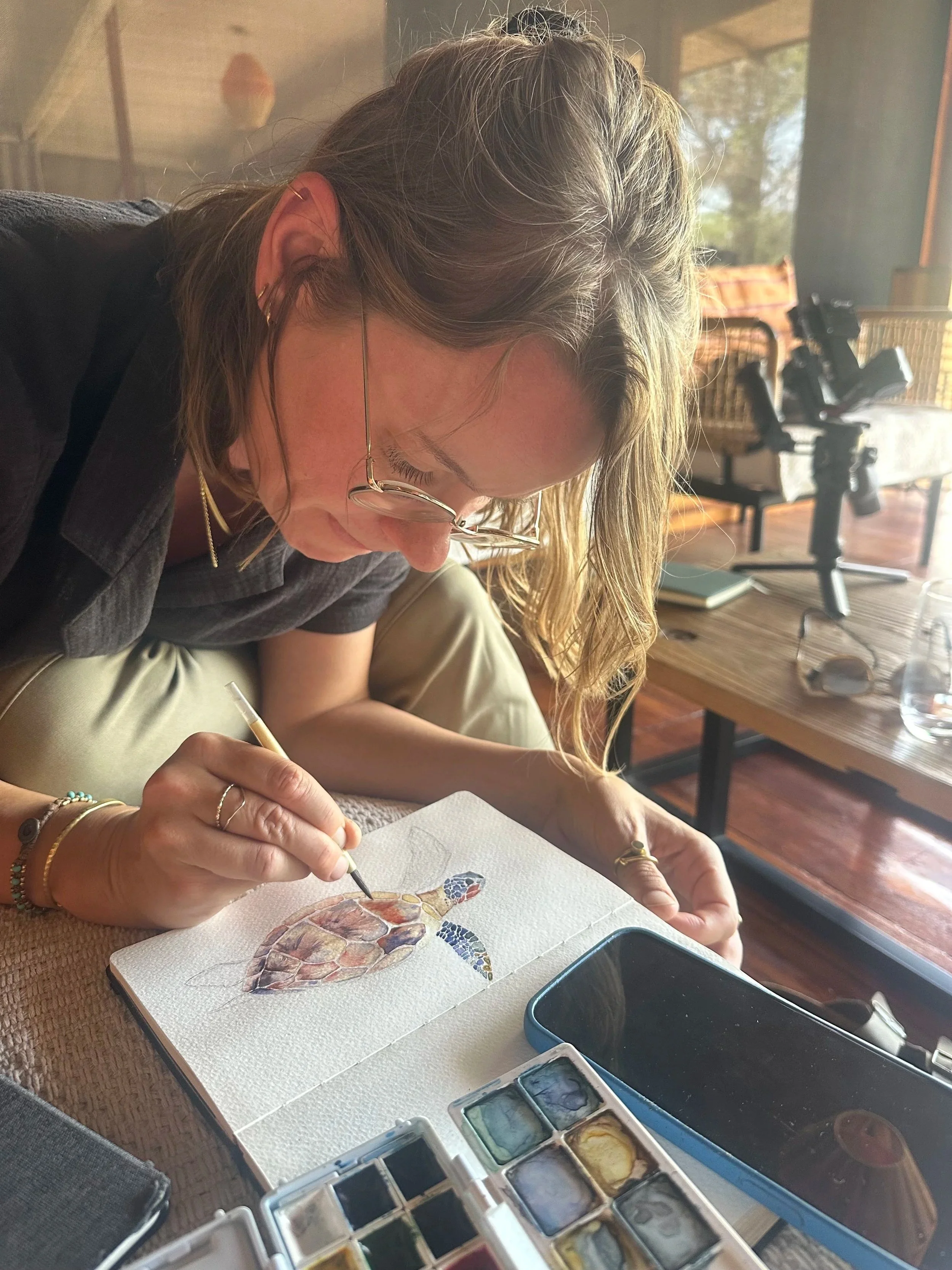
About the Artist
Kate Vannelli is a conservation scientist with a background at WWF, where her work has centered on big cat human–wildlife coexistence. Alongside that career, she paints — her portraits of lions, tigers, snow leopards, and other threatened species have been sold through WWF's international store to help fund field conservation, and she now lends that same eye to the marine species sharing Maziwe's reef.
Updates to come on how you can purchase some of her donated work.
Land rights
Ten land titles for the Sandawe
Head north from Dodoma into the Kondoa and Chemba districts and the land changes — open miombo woodland closes in, the kind of habitat that holds the water table, feeds livestock, and still yields wild honey, tubers, and medicinal plants the way it has for generations. This is Sandawe country, bordered by Sukuma, Rangi, and Maasai communities: an ancient hunter-gatherer people whose language, built on click consonants found almost nowhere else in East Africa, sets them apart from every neighbour around them.
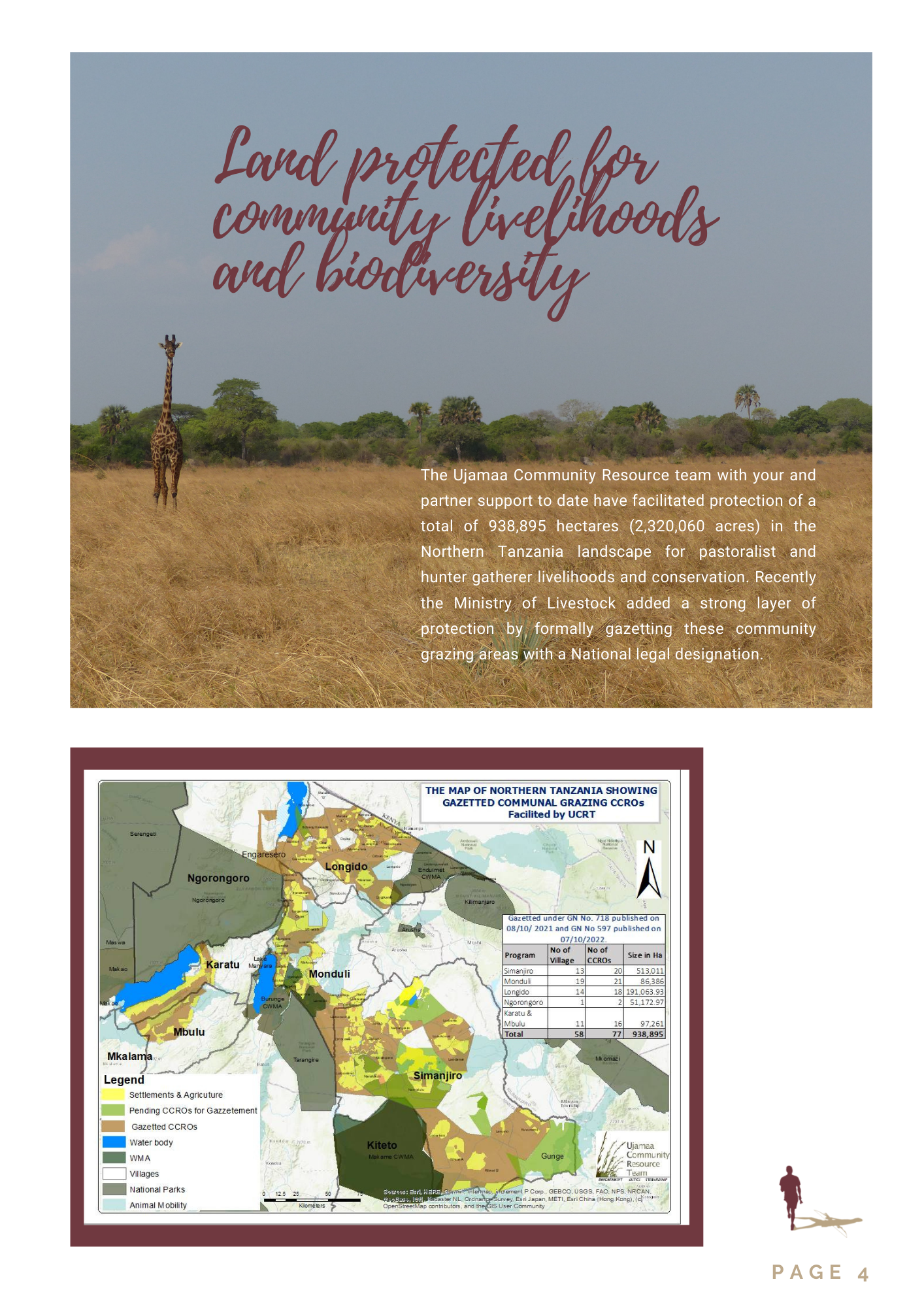
For generations, the Sandawe held this land by custom, not by law, which left it open as farming and settlement pushed further into the woodland around them. This year, working with our implementing partner Ujamaa Community Resource Team (UCRT), we helped fund Certificates of Customary Right of Occupancy formal, government-recognised land titles for a further ten Sandawe villages. The titles give entire communities, rather than individuals, legal standing to defend the woodland their hunting, gathering, and grazing depend on, using the same approach UCRT has used to secure land for the Hadzabe and Akie hunter-gatherer and Indigenous pastoralist communities across northern Tanzania.
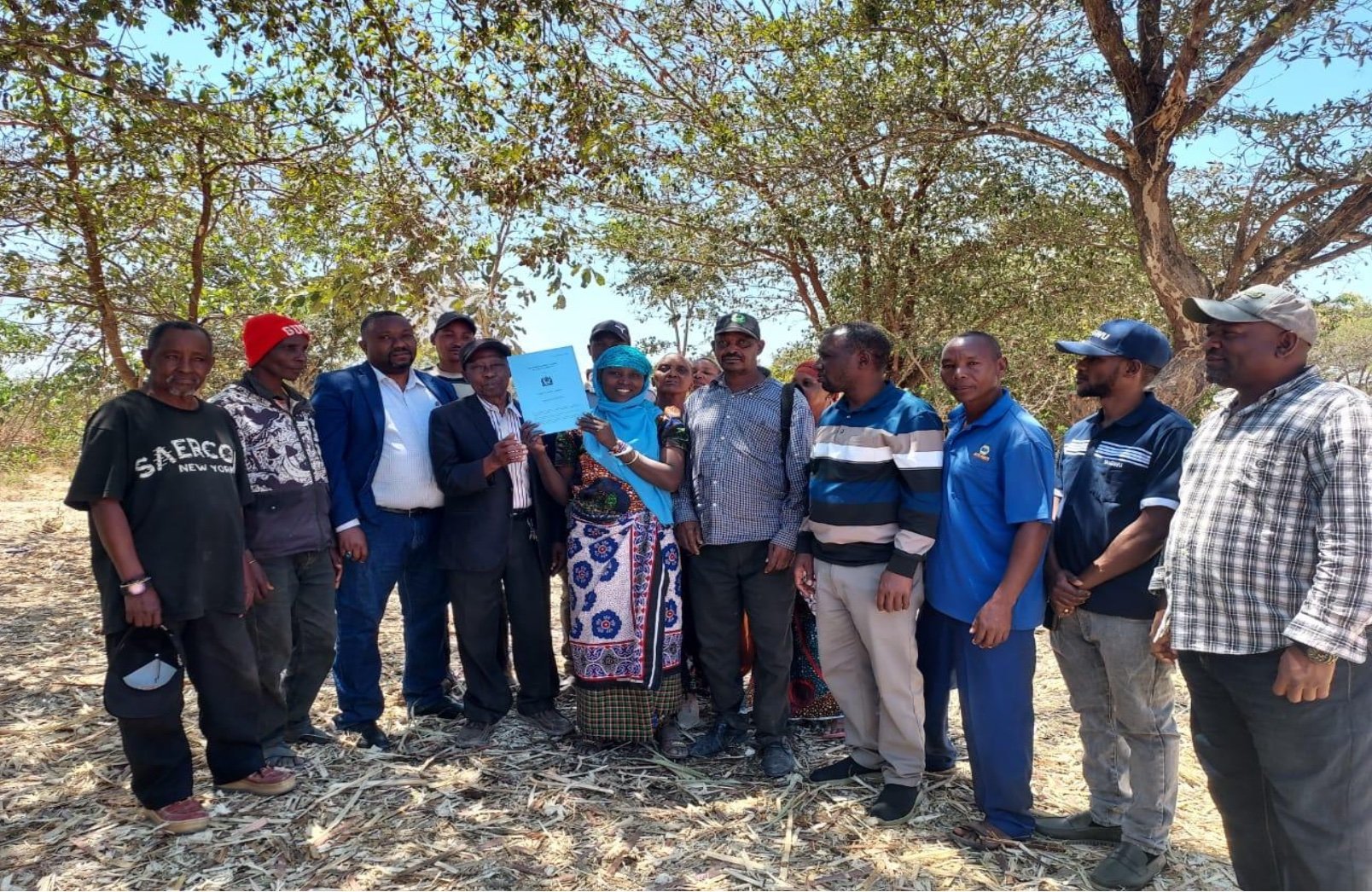
Sandawe community members proudly display communal land title.
Photo credit: UCRT
Traditional Leadership
Makko Sinandei elected Chief of the Maasai across East Africa
At dawn on May 30, surrounded by cattle in a boma in Makuyuni, something remarkable happened for the Maasai people of East Africa. Before the sun was fully up, elders were already leading the customs that have opened gatherings like this for generations: milk poured from gourds, grass pressed into open palms as a sign of peace and blessing, songs and chants carried back and forth across the growing crowd. By full light, many Maasai representatives from seven districts in Tanzania and three counties in Kenya, elders and customary leaders alongside elected officials, women's and youth representatives, and community members who simply wanted to witness it.
What brought them together doesn't happen often: the inauguration of a single Laigwanan — the head spokesperson — for the Maasai people across East Africa. By most accounts, it was the largest gathering of unified Maasai leadership in recent times, and a shared statement of intent: to protect Maasai territory, culture, and identity as one people rather than several.
The person chosen is someone many of you already know. Makko Sinandei is UCRT's founder and current senior advisor, and still serves as the organisation's Hanang and Ngorongoro Program Coordinator. Trained in environmental science and conflict mediation, he has spent decades mediating land disputes and building the legal tools- the Communal Certificate of Customary Rights of Occupancy (CCRO) among them that Maasai, Sandawe, Hadzabe, and other communities now use to secure their land.
The role itself is new, created by customary leaders in response to the growing marginalization of Maasai communities in political decision-making. Just before his ceremonial blessing, Makko explained the shift in strategy it represents:
““We have been in a radical movement for many years. But we have realized that being radical does not give you a position to influence. It makes people see you as an enemy and block your access. Now we need to be flexible, diplomatic, to bring people to the table so they can sit and discuss. That is what this leadership role is about.””
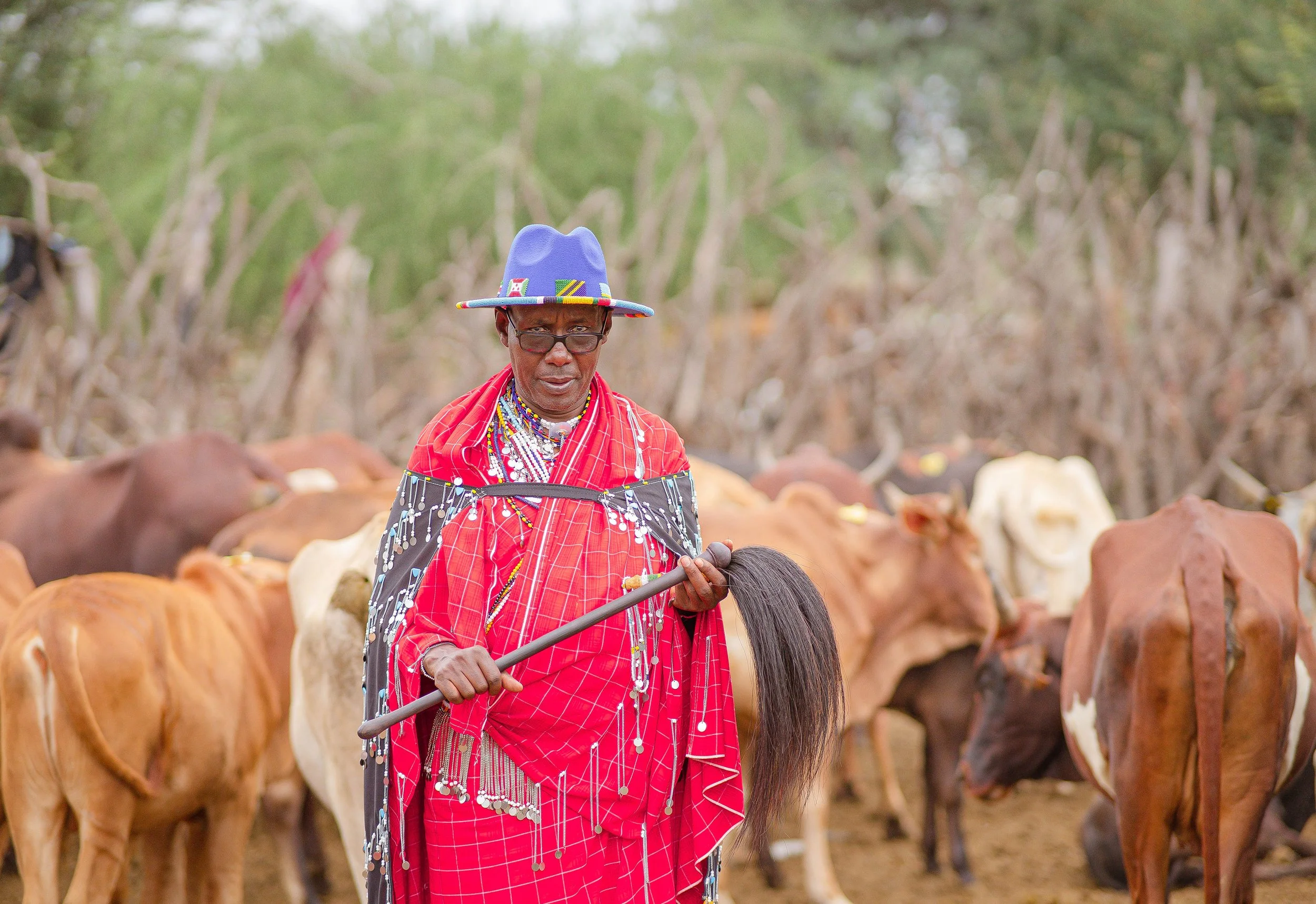
Makko Sinandei receives the traditional blessing during his inauguration as Laigwanan, at a boma in Makuyuni.
Photo credit: UCRT
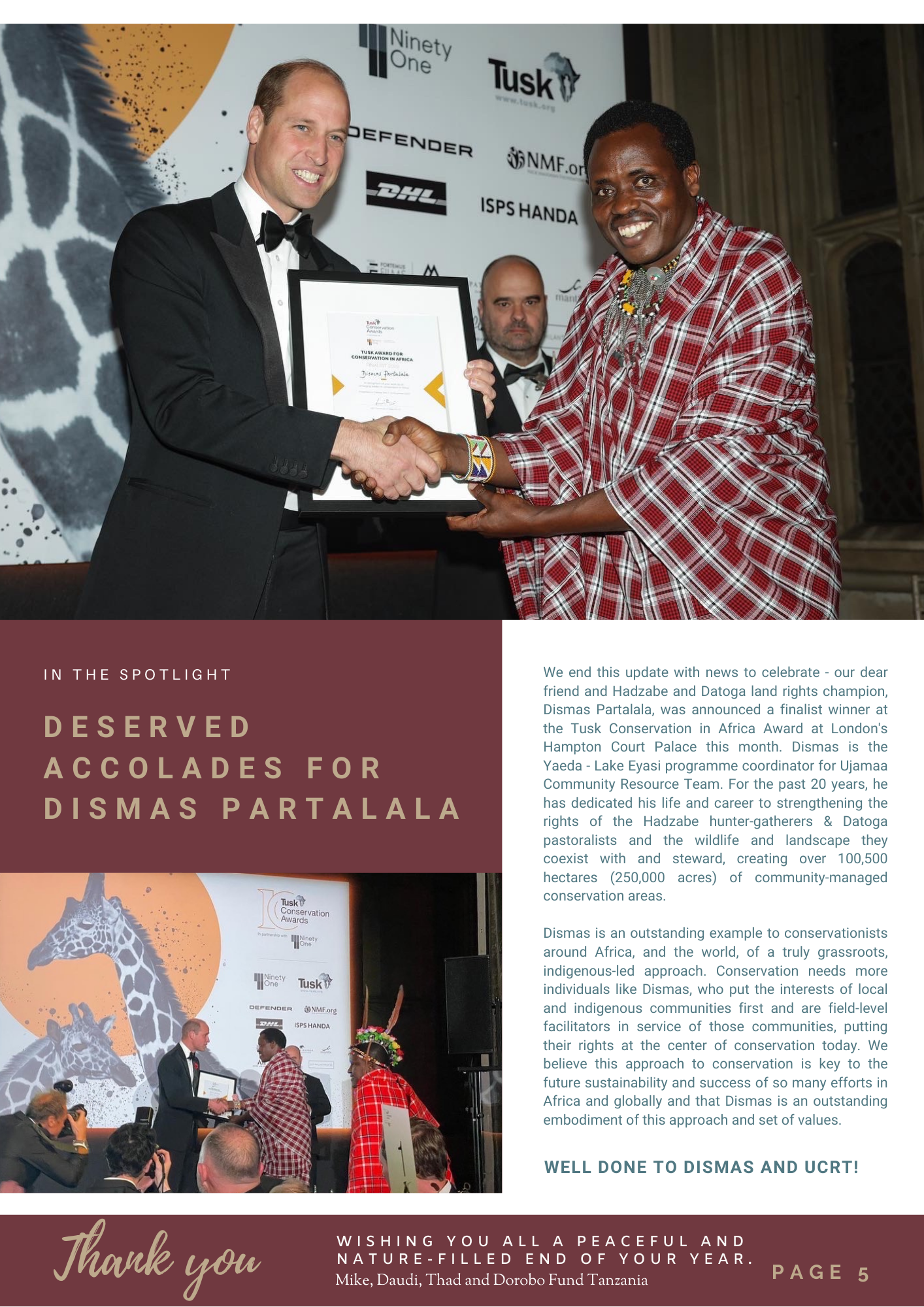
The ceremony began at six that morning with elders speaking on culture, unity and the path ahead, before Makko was formally appointed for this historical position. For Dorobo Fund, watching a partner and friend we've stood beside for years step into a position like this is humbling — we're honored to keep supporting the work Makko and UCRT are doing across the region.
Thank you for making this season's work possible.
Daudi, Thad and Mike Peterson & The Dorobo Fund team
None of this happens without you. If you're able to support next season's work, a gift of any size goes straight to patrols, land titling, conservation and the partners doing this work on the ground.